Temple de Pythons
Temple de Pythons
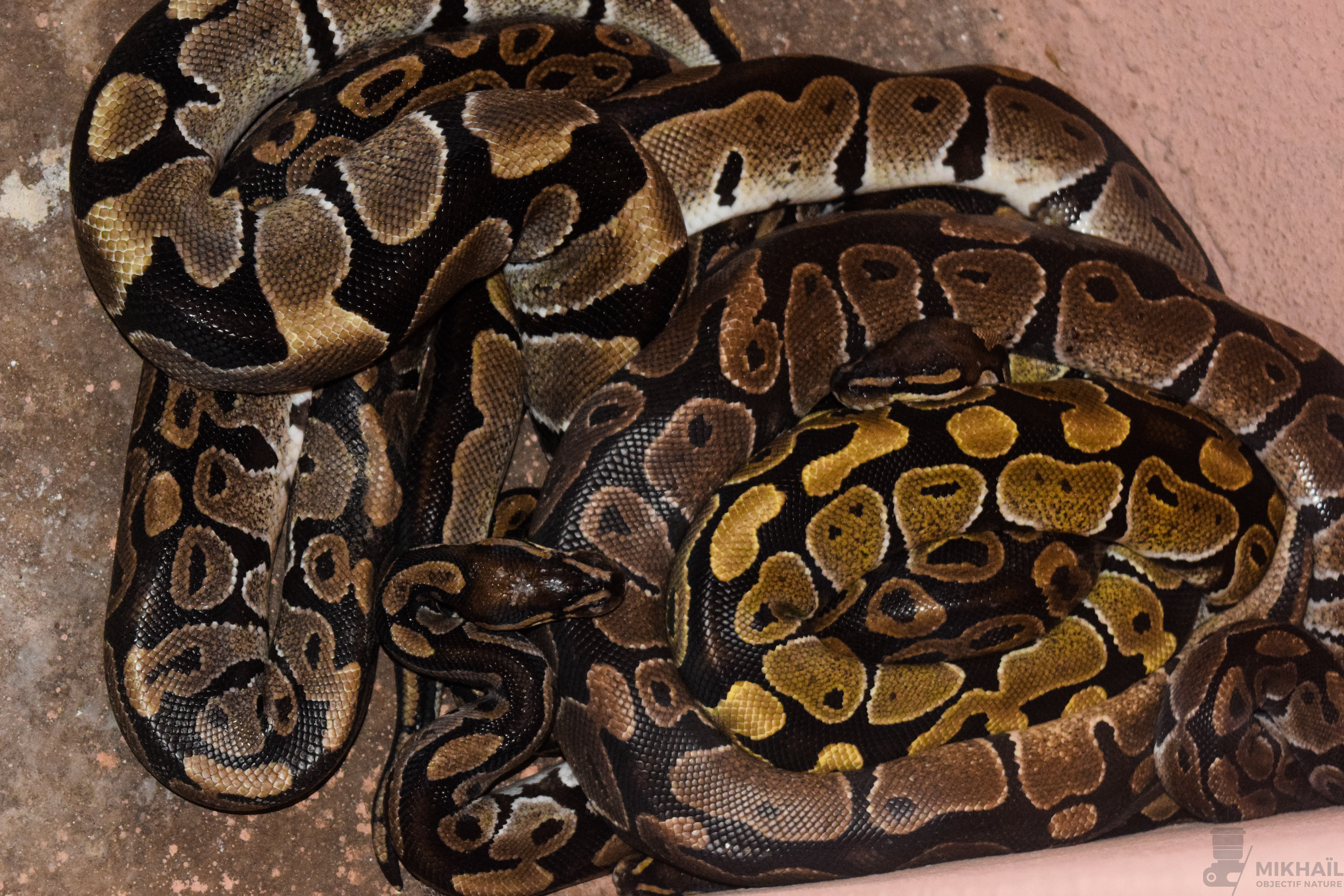
At the heart of the Temple of Ouidah rests one of the most revered beings in Vodoun religion: the royal python. As the earthly incarnation of the deity Dangbé, this majestic reptile is far more than an animal — it is the spiritual guardian of the city, a messenger between humankind and the invisible forces of the universe.
For centuries, about fifty royal pythons have lived freely within the temple's sacred grounds. Never aggressive, they allow visitors to approach, pet, and even hold them. In Benin, harming one of these snakes is considered a grave sacrilege.
Encountering a royal python wandering through the streets of Ouidah is an omen of good fortune. This unique coexistence between humans and serpents embodies the profound spiritual depth of Vodoun — a living heritage at the heart of Beninese identity.
King Kpasse founds the python sanctuary in Ouidah. According to legend, he transformed himself into a python to escape his enemies.
The Vodoun religion develops and the temple becomes the spiritual center of Ouidah. Pythons are officially declared sacred animals.
Despite colonization, the temple continues its religious activities. Pythons remain protected by customary law.
The Republic of Dahomey (future Benin) gains independence. The temple remains a symbol of national cultural identity.
January 10th is officially declared National Vodoun Day. The temple is at the heart of annual celebrations.
The Python Temple is recognized as a major cultural site. It welcomes more than 150,000 visitors per year.
In the Vodoun pantheon of Benin, Ogou (also known as Gu or Gou) is one of the most feared and respected deities. Master of iron, steel and metals, he embodies raw strength, war, the forge and manual labor. He is invoked for the protection of warriors, the blessing of blacksmiths and the success of difficult undertakings.
Ogou is depicted as a powerful and untamable being, holding a machete — both weapon and tool, a symbol of the duality between destruction and creation. In Vodoun ceremonies, his followers wear red and black, his sacred colors, and offer him rum, iron and animal sacrifices.
At the Temple of Ouidah, Ogou holds a central place in rituals. His presence is invoked during the great celebrations of January 10th, National Vodoun Day, where dances, chants and collective trances honor his tutelary power over the community.
Ogou is also the guardian of roads and travelers. Before any journey or important undertaking, the faithful address prayers to him to obtain his protection and ward off evil spirits.
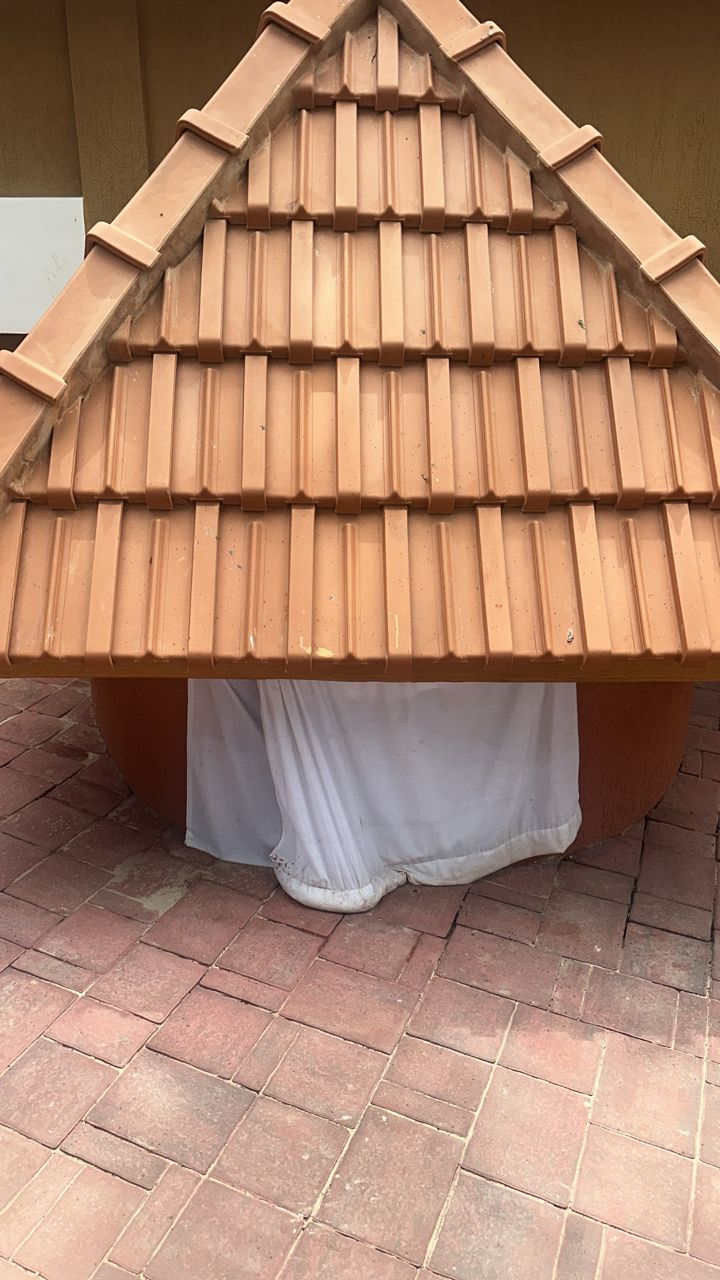
Within the sacred enclosure of the Python Temple of Ouidah stands the purification hut, an intimate and revered place where some of the deepest rituals of the Vodoun tradition take place. It is here that the faithful come to purify soul and body, free their spirits from harmful influences, and reconnect with ancestral forces.
Purification is a central act in Vodoun spirituality. Before approaching the deities, before a great ordeal, or after a period of mourning, the believer must undergo a spiritual cleansing rite guided by a Vodoun priest or priestess — the Vodounon. Ritual baths made from sacred plants, fumigations and invocations accompany the ceremony.
The hut itself is built according to strict ancestral rules, oriented according to the cardinal points and the stars. The walls bear esoteric signs and symbols traced in white lime, a secret language between humans and the deities. Access is reserved for initiates and visitors accompanied by an authorized guide.
Walking through the purification hut means accepting to leave the ordinary world behind and enter a space of divine presence — a rare and unforgettable experience offered by the Temple of Ouidah to its most devoted visitors.
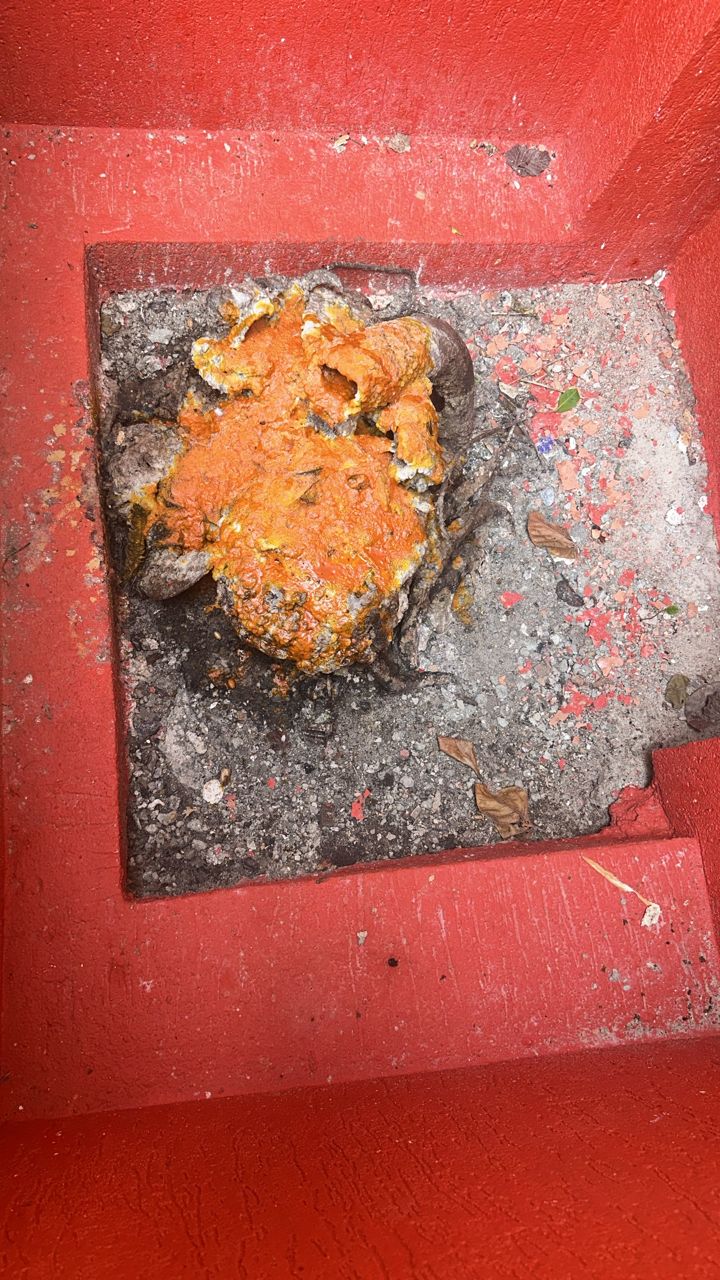
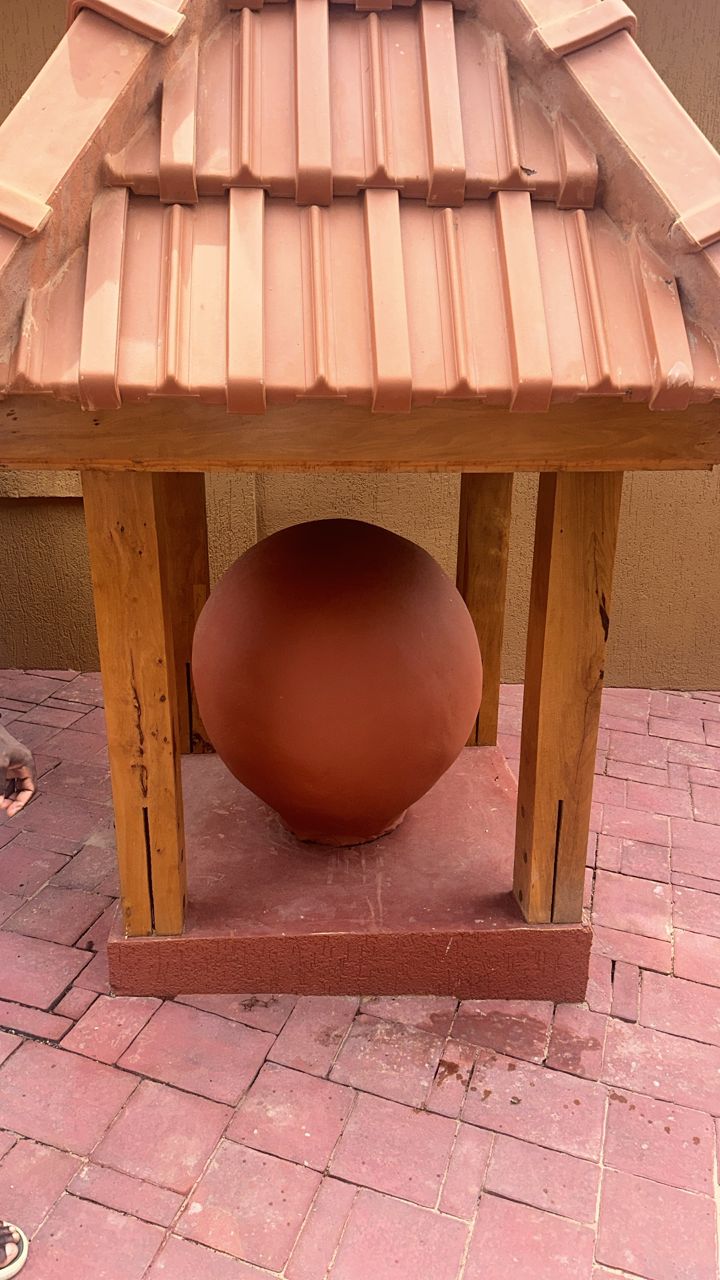
Standing at the heart of the sanctuary, the sacred jar is one of the most important ritual objects of the Python Temple of Ouidah. Crafted using ancestral techniques passed down from generation to generation, it is the living vessel of divine forces — the material seat where Vodoun deities are invited to reside and manifest their power.
Filled with holy water, sacred oils, medicinal plants and esoteric elements known only to initiated priests, the jar actively participates in healing, protection and divination rituals. Each offering made in its name is an act of communion between the world of the living and that of the ancestors.
The sacred jar is also a symbol of abundance and fertility. Women seeking motherhood, families in mourning or individuals facing hardship come to meditate before it, guided by the Vodounon, the temple's keeper, who intercedes with the invisible forces on their behalf.
To touch the jar, even with one's eyes, is a deeply meaningful act. It is a reminder that in Vodoun cosmogony, the visible and the invisible are one, and that every object in the sanctuary is inhabited by its own living, benevolent soul — welcoming to those who approach with respect and humility.
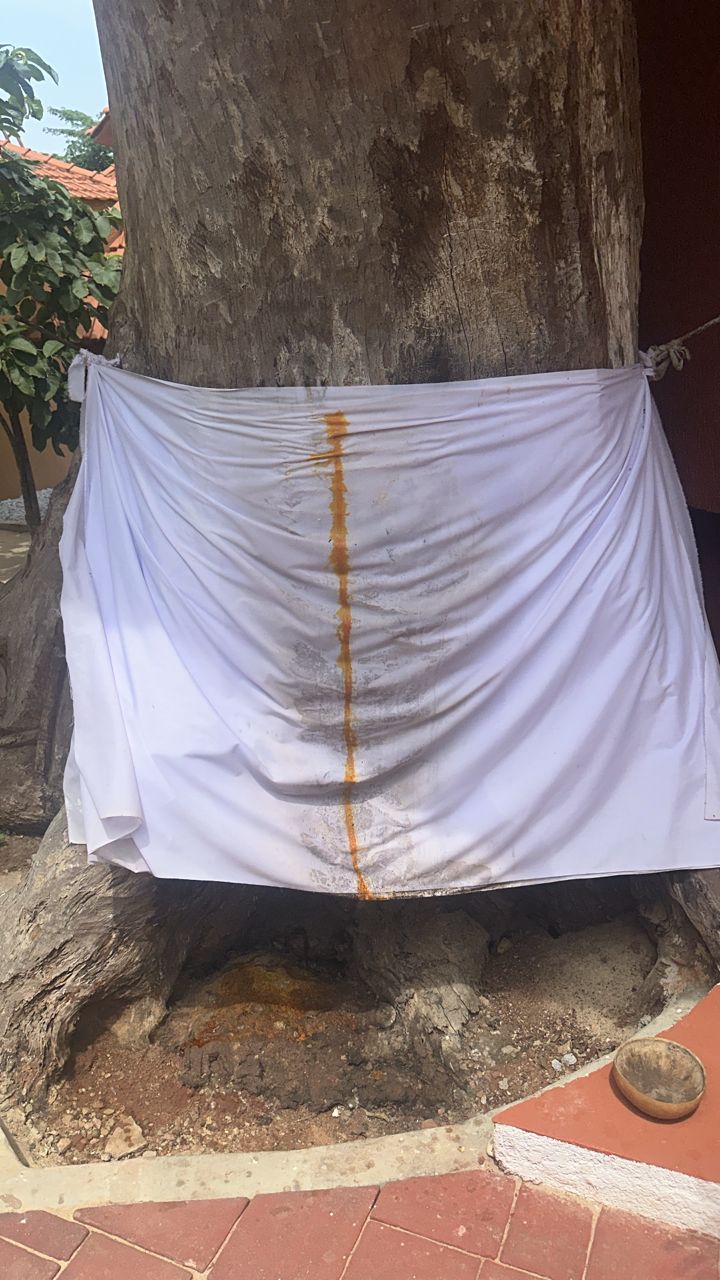
Majestic and centuries old, the sacred Iroko (Milicia excelsa) rises with its imposing silhouette at the heart of the Python Temple of Ouidah. In Vodoun tradition, this tree is not merely a plant — it is a living being inhabited by spirits, a pillar between the human world and the realm of the ancestors, venerated for centuries as a deity in its own right.
The Iroko is the seat of Loko, the Vodoun deity of trees, medicine and healers. The leaves, bark and roots of the tree are used in the preparation of sacred remedies and decoctions. Vodoun priests gather at its foot before every important ceremony to receive Loko's wisdom and the blessing of the ancestors.
Around the sacred Iroko take place some of the most solemn rites of the temple. Libations, offerings of kola nuts, palm oil and white flour are regularly placed at its base. Colored threads and amulets adorn its trunk, silent witnesses to the thousands of prayers and wishes spoken in its shade.
Cutting down a sacred Iroko is considered one of the most serious acts of sacrilege in Beninese culture. Tradition teaches that the tree takes revenge on those who harm it, and that its death brings about that of the one who caused it. This ancient belief has contributed to the preservation of Benin's sacred forests long before the advent of modern conservation policies.
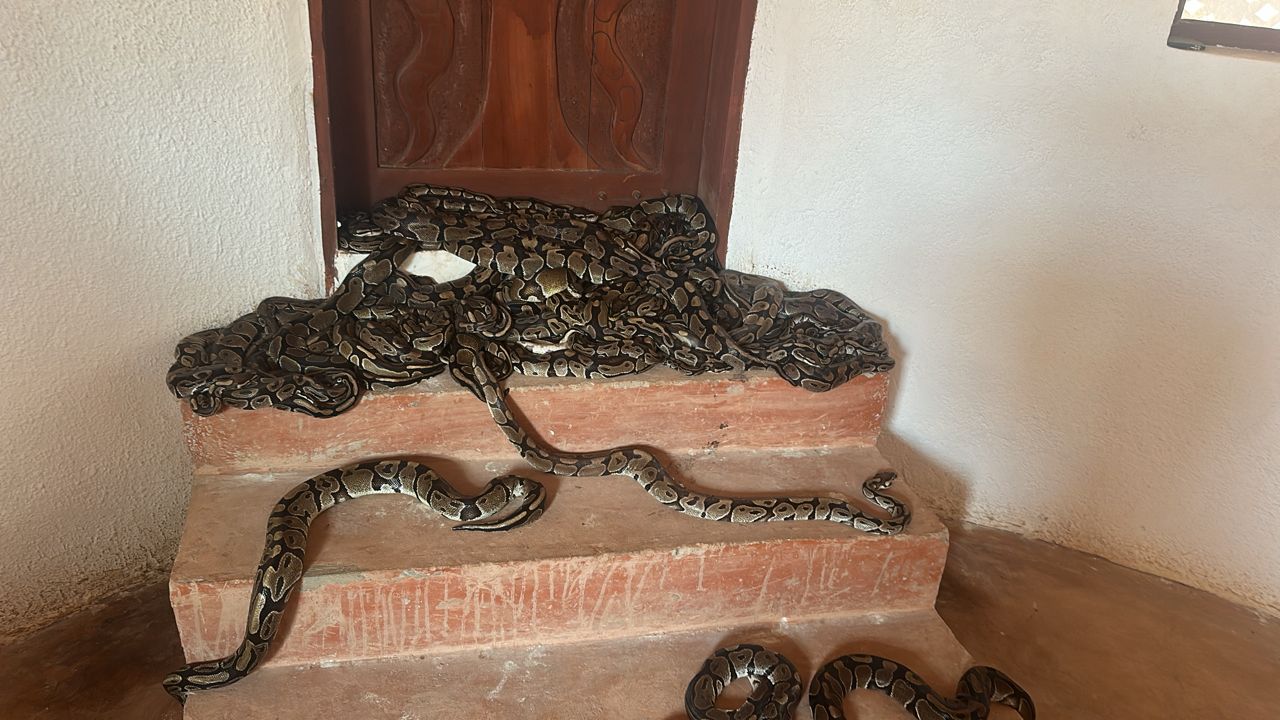
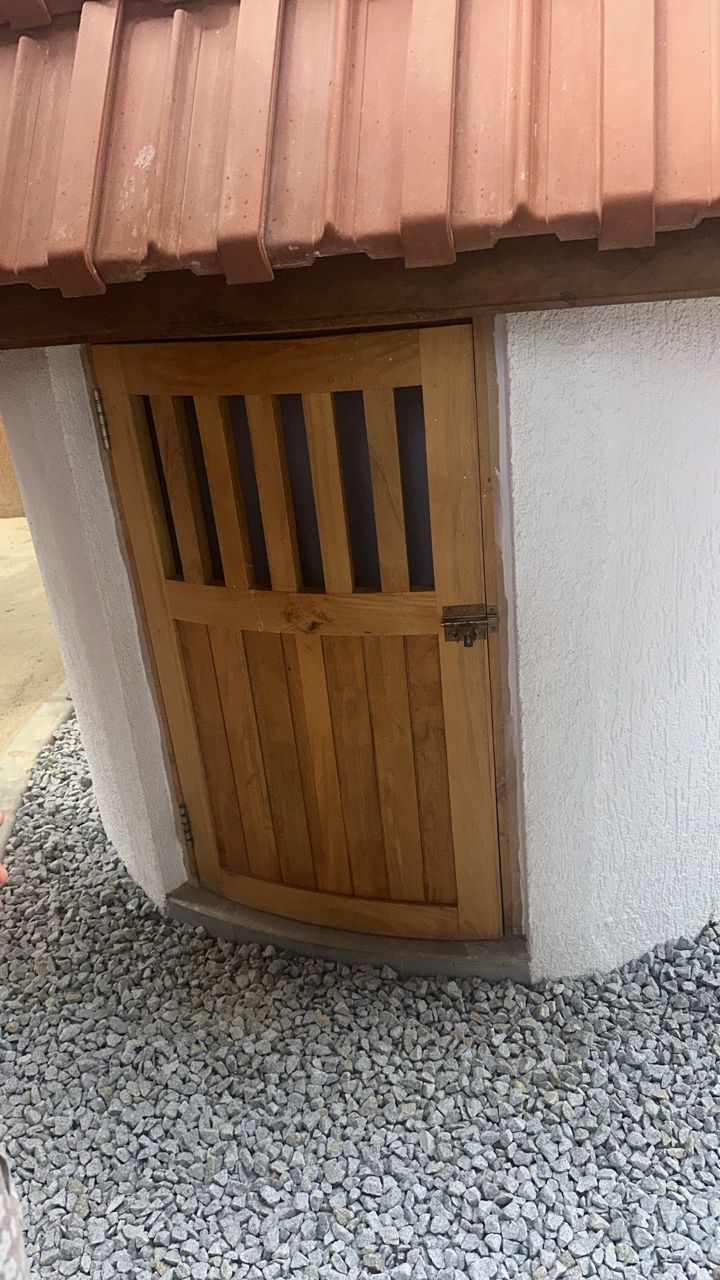
At the center of the sacred enclosure of the Temple of Ouidah stands the python house, a round building of traditional Beninese architecture, built from fired clay and thatched with straw. This is where the sacred royal pythons live, sleep and rest — the living guardians of the city of Ouidah, venerated as deities for more than three centuries.
Inside the house, a gentle, enveloping warmth prevails at all times, conducive to the reptiles' well-being. The pythons glide freely across the earthen floor, coil around branches set up for them, and approach visitors without the slightest aggression. This closeness between humans and the sacred serpent is the living symbol of the harmony uniting the visible and invisible worlds in Vodoun cosmogony.
Vodoun priests watch over the pythons daily: they feed them small rodents and eggs, tend to the injured and ensure that every serpent is treated with the reverence owed to a deity. A python that leaves the temple grounds at night is considered to carry a message from the ancestors — the people of Ouidah then hasten to collect it and escort it back to the sanctuary.
Visiting the python house is a rare and moving experience. Holding a royal python in your hands, feeling the smoothness of its scales and meeting its calm gaze is to touch a living spirituality, intimately bound to the African earth, its gods and its people since the dawn of time.
In the great Vodoun pantheon of Dahomey, Lissa is the masculine power of the divine couple Mawu-Lissa, the supreme deity governing the universe. While Mawu embodies the moon, the night and creative wisdom, Lissa represents the rising sun, vital force, labor and the power of day. Together, they form an inseparable whole, a symbol of the perfect balance between the feminine and masculine principles of creation.
Lissa is invoked as the god of strength and work, the one who gives humans the courage to accomplish great deeds. In Vodoun ceremonies, his followers honor him at sunrise, facing east, with sacred chants, prayers and offerings. The chameleon is his totemic animal — a creature of slowness and wisdom that knows how to adapt to all situations.
At the Temple of Ouidah, Lissa holds an essential place in the Vodoun cosmogony taught to initiates. His iconographic representation often combines the colors of gold and white — white symbolizing divine purity, gold evoking the brilliance of the sun he embodies. The priests devoted to him wear these hues during the great celebrations of January 10th.
To believe in Lissa is to believe that behind every sunrise lies a renewed divine promise — that light will always triumph over darkness, that life continues despite death, and that the forces of the universe watch over every human being with benevolence and justice.